Saturday, 19 July 2014

Life is complicated


Abraham, Isaac and Jacob,  the names roll so easily off our tongues.

these are the patriarchs of the Jewish, and Christian faith.

you think your family is complicated, let’s have a look at this family tree.


look at the chart – Terah, the father of Abraham had 3 sons and 4 daughters – that we know of.  [http://dwell316.files.wordpress.com/2013/10/biay-h-02-abraham-family.pdf ]


Abraham is the father of Ishmael, Isaac and other children, at least 2 more sons –  and 2 wives as well as having a relationship with Hagar which resulted in the birth of Ishmael.

In Genesis chapter 24, we read of the meeting of a servant sent to find Isaac a wife, and Rebekah.  a great great granddaughter of Terah, who is also the grandfather of Isaac.

Rebekah and Isaac have twin sons – Esau and Jacob. we heard about Jacob in todays reading from Genesis. these two were fighting before they were born, and later Jacob tricked his father Isaac into giving him the blessing that belonged to the older son, which was Esau. so Jacob is running away from Esau.

and the story continues with Jacob meeting up with shepherds, as Rachel comes to water the sheep of her father, who happens to be Jacobs uncle. and Jacob wants to Marry Rachel and her father says yes, but you have to work for me for 7 years. then Jacob is tricked and marries Rachel’s sister Leah, and he works for Laban another 7 years to marry Rachel.

what a story – it starts with chapter 12 with Abraham leaving his country to follow a call from God.

while we often think of these people as the great fathers of the faith, men of God, but as we read the story, we see they are no angels. so why might these stories even be included?

Today some families have stories handed down through the generations, stories of an uncle who died in the war – or an great grandmother who travelled the world…well, these are the family stories of the offspring of Abraham, stories of how Abraham left the country he was born in, and that his son and grandson chose wives from amongst his people. these are the family stories telling how they would become a great nation, stories that define the family, which ends up being a nation.

but these people were not perfect, just like us they had decisions to make. and as we look back at their lives, some seem hasty and poor choices.

what of our decisions?

looking at the parable in Matthews gospel we read of a farmer who sows wheat, and yet mong the wheat are some weeds, or more specifically tares. Tares is a specific kind of weed, which looks like wheat when it is young. you don’t risk pulling up the young plants as it is difficult to tell the wheat from the weeds. and this was before machines planted wheat in rows, seed was scattered by hand, as we heard about last week.

the young plants look quite similar, but when the seed head develops it is a different shape to wheat. so you need to wait for the right time to separate the wheat from the tares.

what make of this parable? – well looking at the explanation, I suggest this is a parable that tells us to leave the judging to God – you can’t tell which is wheat or weed early in the piece, so just leave for God to work out.

I wonder who are the people we choose to treat as if they are not worth anything?

who are the people we try and exclude?

but I wonder if this parable doesn’t also remind us, that like Abraham, Isaac and Jacob we are not wheat or weed, we are both.

this contemporary reading looks at Abraham, Moses, a woman, and Paul.  [from Spill the Beans]

an image: a matter of perspective https://www.facebook.com/photo.php?fbid=894074757288596&set=a.188695787826500.54678.188533647842714&type=1


life is not simple,

families can be complicated,

options can look similar

choices unclear


but God used Abraham and Isaac and Jacob, and their offspring


Dear Lord, our lives are coloured by ambiguity

and we don’t always know the right or best thing to do.

But we do know that your love is guiding us

and that you have called us to live as your people in the world. When we face hard choices,

give us eyes to see the best path forward

and the courage to follow it.

When we make mistakes, forgive us.

When we are hurt by our choices, comfort us.

When we hurt others, help us to reach out to them in love.

And above and beyond all these decisions,

remind us that you still love us

and call us back to this place

that we may be forgiven, renewed, called,

and sent forth once more as your beloved children.

In Jesus’ name we pray. Amen. [David Lose]

Saturday, 12 July 2014

extravagent sowing


In the three times this set of readings has been in the lectionary in the past 8 years, the previous two times I have been on holidays.


some things I notice in this reading:

  • the parable focuses on the sower, the explanation focuses on the types of soil
  • this is in Matthews gospel, so it is kingdom talk, not conventional wisdom
  • Matthew chapter 13 has 7 parables, most without a recorded explanation


I wonder what was going through the minds of the people listening to Jesus tell the parable. there he is, out in a boat, the people on land, listening top this story.


I wonder who was in the crowd that day, other than the disciples?  probably some locals, maybe some people who were travelling to get  a glimpse of Jesus, maybe some religious authorities, or their spies – seeking a reason to get rid of Jesus. because even by this point in the story, Jesus is a problem for the religious leaders. at the end of chapter 13, after the parables, we have the section about Jesus being rejected in his home town, and then in chapter 14, the killing of John the Baptist.


as with all parables there are many layers of meaning here.

on the surface, it seems to be a simple story about farming.  

you scatter seed,

some sprouts, some doesn’t;

some plants survive, some don’t;

some produce more harvest than others.

it all makes sense.

this was common farming practice, and rather than thinking about the harvest from each type of soil, the farmer would be pleased to have so much grain to store. [Kathryn Matthews Huey UCC Samuel]


But it isn’t just about farming practices.

it also tells of the situation of  Matthew’s community. they were staring to wonder about why people would hear the teaching of Jesus, and not stay for the long haul. Many people heard the teaching of Jesus, saw his ministry, healing, including the outcast, standing up to the religious authorities; so why did not everyone follow Jesus as the disciples did – or at least believe and live out their faith long term? this parable offers them hope, that in the end there would be a great harvest; a large body of believers.  


another way to think about the parable is the foolish, extravagant generosity of the sower.  it is an image of a God who continues to shower mercy, grace and love to the world, knowing that some will not bear fruit. this is not a calculated strategy to get a return, but an amazing gift of grace, spread on the hard- hearted, the selfish, and those who are searching for God.


on another level this is about the way we respond to hearing the gospel, the good news of God’s love, and how we live that out in our lives.  There are some days when life seems to overwhelm and choke our faith; there are some days when our lack of depth of faith means we struggle to survive; there are days when God’s words to us don’t get heard by us at all. and there are days when we live out our faith, being the people God calls us to be.


another we could think about is where do we sow seeds?

and what seeds so we sow?

do we sow good seed?

do we sow love, grace, bitterness, hatred, forgiveness?

are we particular about where we show God’s hope and peace,

or do we bless all we meet?

the young person with a skateboard, the older person slowing us down as we shop?


and there may be other ways to understand this parable as well.


another story: The Old Man and the Scorpion

One morning, after he had finished his meditation, the old man opened his eyes and saw a scorpion floating helplessly in the water. As the scorpion was washed closer to the tree, the old man quickly stretched himself out on one of the long  roots that branched out into the river and reached out to rescue the drowning creature. As soon as he touched it, the scorpion stung him. Instinctively the man withdrew his hand. A minute later, after he had regained his balance, he stretched himself out again on the roots to save the scorpion. This time the scorpion stung him so badly with its poisonous tail that his hand became swollen and bloody and his face contorted with pain.

At that moment, a passer-by saw the old man stretched out on the roots struggling with the scorpion and shouted: "Hey, stupid old man, what's wrong with you? Only a fool would risk his life for the sake of an ugly, evil creature. Don't you know you could kill yourself trying to save that ungrateful scorpion?"

The old man turned his head. Looking into the stranger's eyes he said calmly, "My friend, just because it is the scorpion's nature to sting, that does not change my nature to save."

[ I don't know where this story originates]


there is a  group of people from here who lead worship at Garrawarra every month, the group leads singing, reads the Bible, leads prayers and gives a short talk. and we don’t know if anyone is listening,  or even awake. but we offer our best, because that is who we are.

in the same way some people here offer ministry through

working in the local community,

by collecting food for people who struggle with housing,

by standing in solidarity with people who are treated unjustly.


in the same way we wrote letters with Amnesty a few weeks ago, we write in hope, not in certainty.


God offered and offers life to each one of us, life in all its fullness. this offer isn’t only made to people who will respond, this offer isn’t calculated, but given freely.


do we live to our fullest potential?


do we worry that Gods extravagance is  wasteful?

do we waste ourselves in love as God loves us?


Saturday, 5 July 2014

risking the yoke of Jesus


there is much on this weeks sermon that comes directly from other people


there are a few parts in Matthew’s gospel I want us to reflect on today.


I can imagine John in prison, wondering if Jesus, his cousin,

Jesus, who he baptised, has lived up to his name of Emmanuel.

today the words may be different, but people still ask:

who is Jesus?

what is so special about Jesus?

what does Jesus have to do with life today?

does God care about me?


Jesus responds not with a long theological or philosophical answer; but tells John’s disciples to report back to John what they have heard and seen:  

the blind receive their sight,

the lame walk,

the lepers are cleansed,

the deaf hear,

the dead are raised,

and the poor have good news brought to them.


when people ask you, what difference does Jesus make? 

how might you answer them?  

what difference does Jesus make in your life?


…………………


What do you want? Jesus seems to ask the crowd.  [David Lose]


John the Baptist is an ascetic, living in the desert, separating himself from all that had the potential to tempt or corrupt him, anything that would make him deviate from his true path of devotion and holiness. He fasted and lived in isolation in order to preserve his purity. ‘He’s a demon,’ the people said. ‘He must be mad to cut himself off from all that we know and enjoy in our society.’ Jesus, on the other hand, lived a life fully immersed in the lives of the people of his day, spurning asceticism, engaging with people where he found them. And the people said, ‘He’s a glutton and a drunkard, a friend of all those who have the potential to corrupt, people like tax-collectors, every kind of sinner.’ [Rev Tom Gordon Church of Scotland, starters for Sunday]


the image Matthew records is of children playing – typically at weddings the men would play flute and dance; and at funerals women would wail. it is possible that children are practicing their roles, but others won’t join in.  Regardless of the image, people can be fickle.

one example is in the church - 

most churches say they want to grow, but are not willing to change

want young people in worship, but not guitars or drums

want to know what is happening, but don’t look at the material provided

another area is government –

we want lower taxes and more teachers

we want better health care at no cost

we want detailed answers, but only watch the sound bites on TV or radio.


I wonder if some people just need something to complain about?


What do you want? Jesus seems to ask the crowd. 

Except he knows they won’t answer. They, and we, can’t.

Because what we want is to grow, to evolve, to improve our relationship with God and each other.  And yet at the same time we want to be left alone, untouched and unchanged. Because to change is to lose something.

Change, brings the unknown. Change is not certain. Change implies risk and even potential loss. Which is why we often stay in failed jobs and relationships – they may not be much, but at least they’re something and at least we know what to expect.

But here’s the difficult truth about life in Christ. You cannot enter into it and expect to be unchanged. [David Lose amended]


…………………..


and we come to the final few verses of our reading:

28 ‘Come to me, all you that are weary and are carrying heavy burdens, and I will give you rest. 29 Take my yoke upon you, and learn from me; for I am gentle and humble in heart, and you will find rest for your souls. 30 For my yoke is easy, and my burden is light.’


I imagine some of you are pleased I am up to this part – no hard  questions about the difference Jesus makes in our lives, or challenges about the changes that come from knowing Jesus. this is the gospel we yearn for: come and rest.


what comes to mind when you think of rest?:

sleep

putting your feet up


Jesus says: come and rest and take my yoke upon you

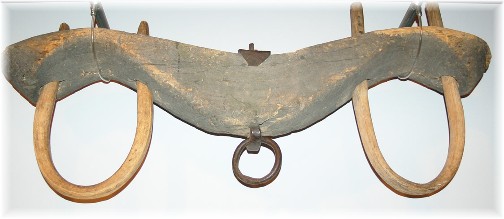
here is a  picture of a yoke


you don’t put a yoke on animal unless you are ready for it to work, which doesn’t sound like the kind of rest I had in mind.

here is a picture of a team of oxen.


what might this saying of Jesus refer to, as I can’t imagine putting on a yoke and then  putting my feet up with a hot chocolate and read the paper.


Clearly rest in this sense does not mean inactivity.


what might we need to rest from:

fear

worry

anxiety

what do others think about us

needing to be in control


I read that where it is translated as my yoke is easy, my yoke is kind would be a more accurate reading.  a ‘kind’ yoke is one which is correctly shaped, that doesn’t chafe or rub, that allows the load to be carried evenly. [Interpretation Matthew p 129]


the next two sections of Matthews gospel refers to the Sabbath, and what was allowable on the Sabbath.

the law was meant to aid people in their relationship with God, but for many people it had become an obstacle.  the Sabbath is meant for rest, for not working, for family, for relationship, for health – mental, physical and spiritual health.  we all need a to stop working and rest from our daily labour, whether that is paid or unpaid work.

but the law had been made so strict that you could not pick food for your lunch or heal someone on the Sabbath. The Sabbath is about life, like the gospel it is loving, life-affirming, and liberating.  


getting back to the yoke of Christ – his yoke is well shaped and functional.  it aids in our living and our relationship with God, it is not an unnecessary burden.


‘ Jesus said “ become my yoke mate, and learn how to pull the load by working beside me and watching how I do it. the heavy labour will seem lighter when you allow me to help you with it.” ‘ [Interpretation Matthew p 129]


we all have burdens we carry – grief, pain, …..

but we do not need to carry them alone


I wonder who or what are you yoked with?

when you are yoked together, you move in the same direction at the same speed, otherwise you spend a lot of time and energy battling each other.

are you moving in step with Jesus?

or is something or someone else guiding your life?


there is much in today’s reading:

what difference does Jesus make in your life?

are you willing to accept his yoke?

are you willing to risk him changing you?